
In the modern chemical and cleaning industries, there is a name that, while not widely known to ordinary consumers, underpins a vast system ranging from household laundry detergents to industrial cleaners. It is Dodecylbenzenesulphonic Acid, commonly referred to in the industry as LABSA (CAS: 27176-87-0). This article will provide an in-depth look at the definition, properties, production, and wide-ranging applications of this key chemical.
Dodecylbenzenesulphonic Acid, chemically known as Linear Alkylbenzene Sulphonic Acid, is an organic strong acid produced by the sulfonation of Linear Alkylbenzene (LAB). It appears as a viscous, brownish oily liquid and is the most core and important intermediate raw material for producing anionic surfactants. It can be said that LABSA is an indispensable bridge connecting petrochemical feedstocks to final consumer goods.
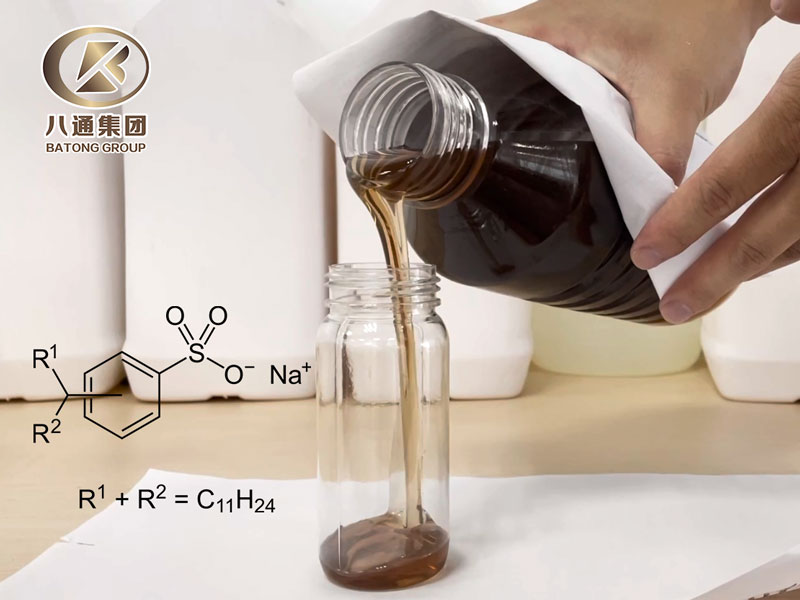
- Molecular Structure & Amphiphilicity: Its molecule has a lipophilic long-chain alkylbenzene at one end and a hydrophilic sulfonic acid group at the other. This "amphiphilic" structure allows it to effectively reduce the surface tension of water, thereby possessing excellent wetting, emulsifying, dispersing, and foaming capabilities.
- Strong Acidity: It is an organic strong acid, is corrosive, and requires appropriate safety precautions during handling.
- High Reactivity: The sulfonic acid group is chemically active and readily undergoes neutralization reactions with bases (e.g., sodium hydroxide, potassium hydroxide) to form corresponding sulfonates—the very active ingredients in various detergents.
Primary Production Process
The mainstream industrial process for producing high-quality LABSA today is the continuous gas-phase sulfur trioxide (SO₃) sulfonation process. This process uses air-diluted SO₃ as the sulfonating agent, reacting with Linear Alkylbenzene (LAB) in a high-efficiency thin-film reactor instantaneously and continuously. This process offers advantages such as thorough reaction, low salt content in the product, light color, fewer by-products, and environmental friendliness, enabling the production of LABSA that meets high-end application requirements.
Application Industries
LABSA is rarely used directly. The vast majority of its value is realized after being converted into its salt forms (especially Sodium Linear Alkylbenzene Sulfonate, or LAS) through neutralization, finding applications in the following fields:
- Detergent & Cleaner Industry (Core Application): This is the largest downstream market for LABSA. The resulting LAS after neutralization is the primary, most cost-effective anionic surfactant in synthetic laundry powders, laundry liquids, dishwashing liquids, soaps, and various household and commercial cleaners, responsible for foaming and grease removal.
- Textile & Leather Industry: Used as a scouring agent, penetrating agent, and leveling agent in textile processing to help treat fibers and ensure even dye distribution. Serves as a degreasing agent in leather processing.
- Agrochemical & Fertilizer Industry: Acts as a key emulsifier and dispersant in pesticide emulsion and solution formulations, ensuring active ingredients are stably and uniformly dispersed in water.
- Petroleum Extraction & Industrial Cleaning: Can be used as a component in oil displacement agents in oilfield chemistry; used in the industrial sector to formulate various powerful cleaners and degreasers for equipment and metals.
- Construction & Building Materials Industry: Serves as an air-entraining agent in concrete additives, improving the workability and durability of concrete.
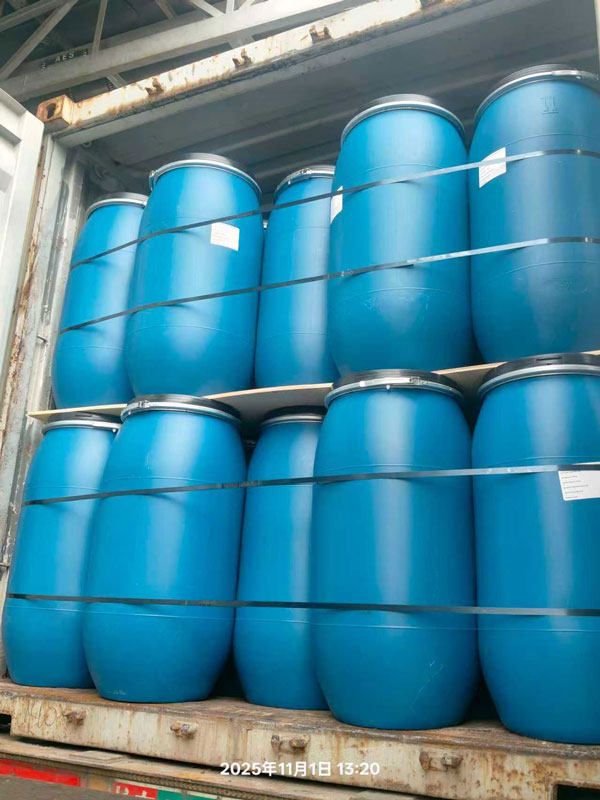
In summary, Dodecylbenzenesulphonic Acid (LABSA), as a cornerstone raw material for the modern surfactant industry, is of paramount importance. From household cleaning to industrial production, its presence is ubiquitous. As demands for product performance and environmental standards continue to rise, the production and application of high-quality LABSA will continue to play a pivotal role in the fine chemicals sector.